
What are the Best Universities in the World?
- Published:
- Updated: September 1, 2026
- By Miguel
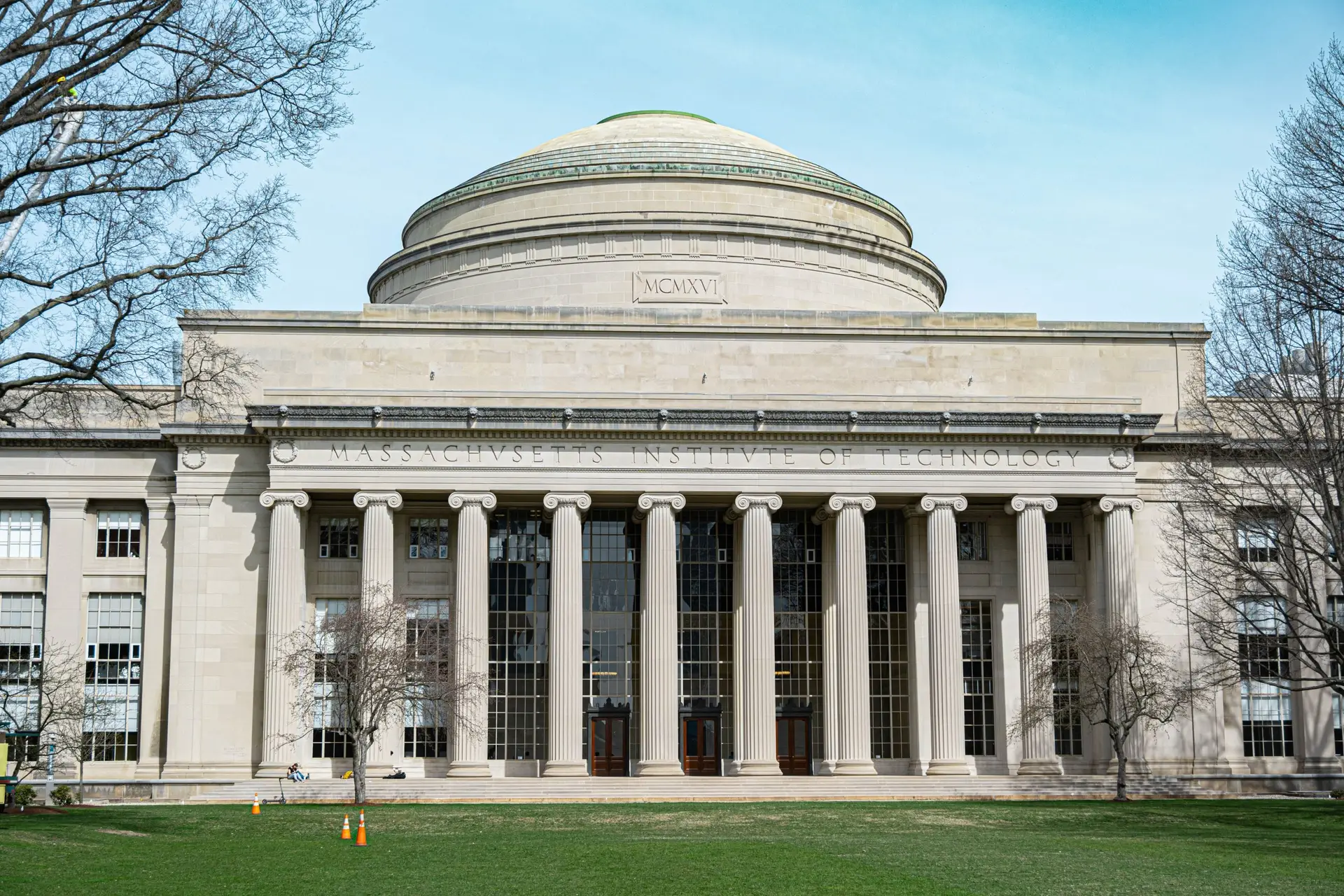
Every year, millions of students and families face the same question: which universities are actually the best in the world? The answer, it turns out, depends entirely on who you ask.
Different ranking systems measure different things: research output, employer reputation, teaching quality, international diversity, and they don’t always agree. MIT sits at the top of one list. Oxford leads another. Harvard dominates a third. None of them are wrong. They’re just answering different questions.
This guide explains how the three major global ranking systems work, show you where the world’s leading universities actually sit across all of them, and give you the regional picture, from the US and UK to China, Singapore, and beyond. More importantly, we’ll help you understand what rankings can and can’t tell you, and how to use them as one tool among many rather than the final word on where to study.
Because the best university in the world and the best university for you are not necessarily the same thing. If you’re targeting Oxford, Cambridge, or another top UK university, our admissions consultants can help.
The Three Major Global University Rankings Explained
Before diving into the lists, it’s worth understanding the three rankings that regularly release reports on the world’s most prestigious universities.
QS World University Rankings
Published by Quacquarelli Symonds, a British higher education consultancy, QS is arguably the most widely recognised ranking among prospective students worldwide. It assesses universities across eight indicators: academic reputation (via a large global survey of academics), employer reputation, faculty-to-student ratio, citations per faculty member, international student ratio, international staff ratio, international research network, and employment outcomes. Academic reputation alone accounts for 30% of the score.
The QS ranking’s heavy weighting toward reputation surveys means it tends to reward institutions already with strong global name recognition. This is why older, well-established Western universities tend to perform well. In 2026, MIT topped the QS rankings for the 15th consecutive year.
Times Higher Education (THE) World University Rankings
THE’s ranking is widely considered the most comprehensive, assessing universities across five broad areas: teaching environment, research environment, research quality (measured by citations), industry connections, and international outlook. It covers over 2,000 institutions from more than 115 countries.
One key feature of THE is that it draws on a large annual academic reputation survey (over 55,000 scholars globally in 2025), but balances this with objective data such as citation counts and industry income. Oxford has held the top spot in the THE rankings for 10 consecutive years as of 2025.
Shanghai Rankings (ARWU)
The Academic Ranking of World Universities, produced by Shanghai Jiao Tong University, is the most research-focused of the three. It measures universities almost exclusively on research output: the number of alumni and staff who have won Nobel Prizes or Fields Medals, the number of highly cited researchers, papers published in the journals Nature and Science, and broader citation indices.
Because of this methodology, ARWU heavily favours large, research-intensive institutions, particularly American universities with deep scientific traditions. Harvard has led ARWU for over two decades. Newer universities, or excellent teaching-focused institutions, tend to rank lower here regardless of their quality.
Why the Same University Can Rank Very Differently Across Lists
These methodological differences matter in practice. A university strong in humanities or social sciences may perform brilliantly on QS or THE but rank modestly on ARWU, which privileges STEM-heavy research output. Conversely, a research powerhouse with a lower profile among students or employers may rank higher on ARWU than on QS.
A useful rule of thumb: look at where a university sits across all three, and weigh whichever ranking most reflects your priorities. This may be employer reputation if you’re focused on careers, or research output if you’re pursuing a PhD.
Rankings Tables
Below are tables displaying the three major university ranking methods. Notice how the same universities appear in very different positions depending on the ranking, this reflects the different methodologies each system uses.
QS World University Rankings 2027
Published 18 June 2026 · Weighted by academic reputation, employer reputation, citations and internationalisation
| Rank▲▼ | University▲▼ | Country▲▼ |
|---|---|---|
| 1 | Massachusetts Institute of Technology (MIT) | 🇺🇸United States |
| =2 | Imperial College London | 🇬🇧United Kingdom |
| =2 | Stanford University | 🇺🇸United States |
| 4 | University of Oxford | 🇬🇧United Kingdom |
| 5 | Harvard University | 🇺🇸United States |
| 6 | University of Cambridge | 🇬🇧United Kingdom |
| 7 | California Institute of Technology | 🇺🇸United States |
| =8 | ETH Zurich | 🇨🇭Switzerland |
| =8 | University College London (UCL) | 🇬🇧United Kingdom |
| 10 | National University of Singapore (NUS) | 🇸🇬Singapore |
| 11 | University of Hong Kong | 🇭🇰Hong Kong SAR |
| 12 | Nanyang Technological University (NTU) | 🇸🇬Singapore |
| 13 | Peking University | 🇨🇳China |
| 14 | Tsinghua University | 🇨🇳China |
| 15 | University of Pennsylvania | 🇺🇸United States |
| =16 | Cornell University | 🇺🇸United States |
| =16 | Yale University | 🇺🇸United States |
| 18 | Chinese University of Hong Kong (CUHK) | 🇭🇰Hong Kong SAR |
| 19 | University of New South Wales (UNSW) | 🇦🇺Australia |
| =20 | Johns Hopkins University | 🇺🇸United States |
Source: topuniversities.com
Times Higher Education World University Rankings 2026
Published 9 October 2025 · Weighted by teaching, research environment, research quality, industry and international outlook · 2027 edition due Autumn 2026
| Rank▲▼ | University▲▼ | Country▲▼ |
|---|---|---|
| 1 | University of Oxford | 🇬🇧United Kingdom |
| 2 | Massachusetts Institute of Technology (MIT) | 🇺🇸United States |
| =3 | Princeton University | 🇺🇸United States |
| =3 | University of Cambridge | 🇬🇧United Kingdom |
| =5 | Harvard University | 🇺🇸United States |
| =5 | Stanford University | 🇺🇸United States |
| 7 | California Institute of Technology | 🇺🇸United States |
| 8 | Imperial College London | 🇬🇧United Kingdom |
| 9 | University of California, Berkeley | 🇺🇸United States |
| 10 | Yale University | 🇺🇸United States |
| 11 | Johns Hopkins University | 🇺🇸United States |
| 12 | Tsinghua University | 🇨🇳China |
| 13 | Peking University | 🇨🇳China |
| 14 | University of Chicago | 🇺🇸United States |
| 15 | ETH Zurich | 🇨🇭Switzerland |
| 16 | University of Pennsylvania | 🇺🇸United States |
| 17 | National University of Singapore (NUS) | 🇸🇬Singapore |
| 18 | Cornell University | 🇺🇸United States |
| 19 | University College London (UCL) | 🇬🇧United Kingdom |
| 20 | Columbia University | 🇺🇸United States |
Source: timeshighereducation.com
Academic Ranking of World Universities (Shanghai) 2025
Published 15 August 2025 · Based on Nobel Prizes, Fields Medals, highly cited researchers and major journal publications · 2026 edition due August 2026
| Rank▲▼ | University▲▼ | Country▲▼ |
|---|---|---|
| 1 | Harvard University | 🇺🇸United States |
| 2 | Stanford University | 🇺🇸United States |
| 3 | Massachusetts Institute of Technology (MIT) | 🇺🇸United States |
| 4 | University of Cambridge | 🇬🇧United Kingdom |
| 5 | University of California, Berkeley | 🇺🇸United States |
| 6 | University of Oxford | 🇬🇧United Kingdom |
| 7 | Princeton University | 🇺🇸United States |
| 8 | Columbia University | 🇺🇸United States |
| 9 | California Institute of Technology | 🇺🇸United States |
| 10 | University of Chicago | 🇺🇸United States |
| 11 | Cornell University | 🇺🇸United States |
| 12 | University of California, Los Angeles (UCLA) | 🇺🇸United States |
| 13 | Université Paris-Saclay | 🇫🇷France |
| 14 | University of Washington | 🇺🇸United States |
| 15 | Johns Hopkins University | 🇺🇸United States |
| 16 | University of California, San Diego | 🇺🇸United States |
| 17 | Yale University | 🇺🇸United States |
| 18 | Tsinghua University | 🇨🇳China |
| 19 | University of Michigan–Ann Arbor | 🇺🇸United States |
| 20 | New York University | 🇺🇸United States |
Source: shanghairanking.com
Oxford and Cambridge appear in the top 10 of every major ranking. If you’re aiming for either, our Oxbridge admissions service gives you the best possible preparation, from personal statement to interview.
Regional Highlights: World’s Top Universities by Region (QS 2027)
United States
The US remains the dominant force in global higher education. MIT holds the top spot for the 15th consecutive year, and Harvard, Stanford, Caltech, Princeton, Yale, and Johns Hopkins all feature in the global top 20. The US has 184 entries in the 2027 rankings, more than any other country by a significant margin. However, 15 of the top 19 US universities dropped positions in the International Student Ratio indicator, a sign that restrictive immigration policy is beginning to affect how internationally competitive American universities appear.
United Kingdom
The UK punches well above its weight globally. The USA and the UK both hold four each of the top 10 places in QS 2027. Imperial College London holds second place globally (joint with Stanford), Oxford sits fourth, Cambridge sixth, and UCL rounds out the UK’s top-10 presence. The UK has 93 universities in the 2027 rankings. However, the picture further down is less comfortable, the UK saw 15 institutions fall by more than 20 places, reflecting pressure on international student recruitment following recent visa policy changes.
If your sights are set on a UK university, our specialists guide students through every stage of the application. Explore our UK admissions service.
Europe (outside the UK)
ETH Zurich in Switzerland is the highest-ranked institution outside the US and UK, in joint eighth place. Germany’s Technical University of Munich sits 25th, while France’s Université PSL ranks 34th as the top EU university. European universities generally offer world-class education at considerably lower tuition fees than their UK and US counterparts, making them an increasingly attractive option, particularly for postgraduate study.
Asia
Asia is the most dynamic region in global rankings right now. The National University of Singapore (NUS) ranks 10th globally, the top-ranked university in Asia.
In mainland China, the two standout institutions are Tsinghua University and Peking University, often described as China’s equivalent of Oxford and Cambridge. Tsinghua ranks 14th in the QS 2027 rankings and has particular strength in engineering and technology. Peking University sits at 17th and excels across natural sciences, humanities, and law. Both institutions are extraordinarily selective, only students who score at the very top of China’s national university entrance examination, the Gaokao, are admitted. China recorded the highest number of new entrants globally in 2027 and contributed the highest number of upward moves across the rankings, with 29 institutions moving up by over 20 places, a trend driven by sustained government investment in research infrastructure and the targeted recruitment of globally cited academics.
Japan’s University of Tokyo remains a long-established elite institution, while India’s IITs continue climbing global tables in engineering and technology.
Oceania
58% of Oceania’s universities rose in the 2027 rankings, with UNSW taking the national top spot for the first time, ranking 19th globally. Monash University also hit a record high, rising five places to 31st. Australia dominates the region’s representation in global rankings, with the University of Melbourne, Australian National University, and the University of Sydney also consistently featuring in the global top 100. New Zealand’s University of Auckland is the region’s other notable presence, typically ranking in the global top 150. Oceania’s universities score particularly well on international student diversity and research collaboration, making them popular destinations for students from across the Asia-Pacific region.
Africa
African universities remain underrepresented in global rankings, largely due to structural funding disparities rather than a lack of academic talent. The University of Cape Town remains Africa’s top-ranked university at 184th.
Rankings narrow a list; they do not choose for you. We help families weigh course, country and cost together, while the shortlist is still open.
Book a free consultationThe Rise of Asian Universities
One of the most significant trends in global higher education over the past two decades has been the rapid ascent of Asian universities, particularly from China. The global rankings have grown from 200 universities in 2004 to over 2,000 in 2025, with the US’s share of ranked institutions falling from 31% to 8%, and the UK’s from 15% to 5%.
China’s Tsinghua University and Peking University now regularly feature in the global top 20, a position unimaginable in the early 2000s. This rise is largely the result of massive government investment, strategic recruitment of globally cited researchers, and policies explicitly designed to improve international rankings performance.
Singapore’s National University of Singapore (NUS) and Nanyang Technological University (NTU) both feature in the global top 20 in QS, and are genuinely world-class research institutions. Japan’s University of Tokyo remains Asia’s most established elite university, while India’s IITs have begun climbing global tables in engineering and technology.
For students open to studying outside the traditional UK-USA circuit, Asian universities, particularly in Singapore, offer world-class education in English, often with significantly lower tuition fees and excellent graduate employment prospects in the Asia-Pacific region.
Why You Should Take University Rankings with a Grain of Salt
Global university rankings are useful, but they are far from perfect. Treating any single list as definitive is a mistake and can steer you the wrong way.
Rankings can contradict each other significantly, and they change every year. A university ranked 5th this year may be 15th by the time you graduate, while another climbs in the opposite direction. Different ranking systems also measure different things, so the same university can sit in very different positions depending on which table you consult. The university you enrol in and the university you graduate from, on paper, may not look the same.
They don’t capture subject-level strength. A university ranked 30th globally may have a world-class department in your chosen subject. Always check subject-specific rankings alongside overall tables.
They are biased toward research and STEM. The methodologies employed by QS, THE, and ARWU all demonstrate a clear bias towards the English language, certain types of research, and STEM subjects. This systematically undervalues humanities, social sciences, creative arts, and teaching-focused institutions.
They can be gamed. Universities can (and do) strategically allocate resources to boost specific metrics. It can take only one highly cited researcher joining the faculty for a university to climb 100 places in the THE rankings. This is a genuine distortion of what rankings are supposed to measure.
They don’t measure your experience as a student. Teaching quality, class sizes, pastoral support, the campus environment, the city you’ll live in, or postgraduate opportunities. None of these factors are adequately captured in global rankings, which are arguably research-output tables presented as consumer guides.
How to Choose the Right University? Beyond the Rankings
Subject specific rankings: Every major ranking publishes subject tables. A university can be mediocre overall but exceptional in your field. For example, the London School of Economics ranks relatively modestly in global tables dominated by large multi-faculty science institutions. However, it is one of the world’s most respected institutions for economics, finance, law, and social sciences. For students applying to competitive UK universities, many top courses also require admissions tests, so subject strength and entry requirements go hand in hand.
Location: Country, city, and region matter enormously, and not just academically. Do you want to be in a major global city with immediate access to industry, or a university town where student life is more self-contained? Are you open to studying in a country where the language of instruction isn’t English? Living abroad for three or four years is a significant life experience in itself, and the culture, climate, and cost of living of where you study will shape your time there as much as the institution itself.
University size: A large research university with 40,000 students offers breadth, diversity, and the energy of a small city. A smaller, specialist institution offers closer contact with faculty, tighter communities, and more focused academic environments. Neither is inherently better, it depends entirely on how you learn and what kind of student experience you want.
Graduate outcomes: Look at what graduates from your specific course actually go on to do, and what they earn. In the UK, the Longitudinal Education Outcomes (LEO) data gives salary information by subject and institution. Some universities may rank outside the top 50 overall yet produce graduates with outstanding employment rates in particular sectors.
Open days and campus visits: No ranking will tell you whether you’ll thrive in Oxford’s centuries-old collegiate environment or prefer the dynamism of a city university like UCL or Manchester. Visiting these institutions, speaking to current students, attending sample lectures, and exploring the city and campus, remain the single most valuable thing a prospective student can do. When you’re ready to apply to a UK university, your UCAS personal statement will be one of the most important things you write.
Cost and scholarships: Top rankings are heavily dominated by American universities, where tuition fees can reach $80,000 per year or more. European alternatives, like ETH Zurich, the University of Amsterdam, and universities in Germany, offer genuinely world-class education at a fraction of the cost.
Graduate visas: How easy is it to remain in the country you study in after graduating? The UK’s Graduate Route visa, which allows international students to remain and work for two years after graduating, is a significant practical consideration for non-UK students.
Research supervisors (for postgraduate students): If you’re pursuing a PhD or research master’s, the ranking of the institution matters far less than the specific expertise and output of the supervisor you’ll be working with. A world-leading researcher at a university ranked 80th is a better choice than a mid-ranking academic at a top-10 institution.
Advice for International Students
Choosing to study abroad is one of the most significant decisions you’ll make, and global rankings, while useful, were not designed with the international student experience in mind. Here’s what to consider beyond the league tables.
Language and teaching style. Most of the world’s top-ranked universities teach in English, but not all of them. If you’re considering universities in Germany, France, Japan, or South Korea, check whether your chosen programme is taught in English or requires proficiency in the local language. Even at English-medium universities, the academic culture can vary significantly, tutorials at Oxford feel nothing like seminars at MIT or lectures at NUS.
Visa requirements and post-study work rights. This is one of the most practically important factors and one of the least discussed in rankings. Countries differ significantly in how easy it is to remain and work after graduating. The UK’s Graduate Route visa allows two years of post-study work without a job offer. Australia offers similar provisions. The US, by contrast, has a far more restrictive post-study work system, with Optional Practical Training (OPT) limited to one year for most graduates (three for STEM subjects), followed by a highly competitive visa lottery. Research the immigration pathway in your target country before committing, it may matter as much as the university itself.
Cost of living, not just tuition. Tuition fees make headlines, but living costs can be equally significant. London and New York are among the most expensive cities in the world for students. Zurich is even pricier. By contrast, universities in Germany offer tuition-free or very low-cost education, and cities like Edinburgh, Melbourne, and Singapore offer a strong quality of life at a lower cost than their US or London equivalents. Build a full financial picture, accommodation, food, transport, and healthcare, before making your decision.
Recognition of your degree back home. A degree from a top-ranked institution is globally respected, but it’s worth checking how qualifications from your target country are recognised in your home country, particularly for regulated professions like medicine, law, and engineering. Professional bodies in your home country may require additional accreditation or conversion courses regardless of where you studied.
Support services for international students. The best universities for international students aren’t always the highest-ranked ones overall. Look for dedicated international student offices, mental health and welfare support, visa and immigration advice, and active international student communities. Arriving in a new country to study is exciting, but it can also be isolating, and the quality of institutional support makes a real difference.
Scholarships and funding. Many of the world’s top universities offer merit-based scholarships specifically for international students. The Gates Cambridge Scholarship, the Chevening Scholarship (UK), the Clarendon Fund (Oxford), and numerous country-specific programmes can significantly offset the cost of tuition and living. Research funding opportunities early, many have deadlines six to twelve months before the start of the academic year.
We work with international students from across Asia, the Middle East, and beyond. All sessions are online. Find out how we work with international applicants.
Conclusion
The world’s best universities are remarkable institutions, places where Nobel Prize-winning research sits alongside undergraduate teaching, where students arrive from every corner of the globe, and where the ideas developed in lecture theatres and laboratories shape the world beyond them. There is a reason the same names appear at the top of rankings year after year.
But a ranking is a number, and a number can only tell you so much. It won’t tell you whether you’ll thrive in a tutorial system or prefer lectures. It won’t tell you whether you’ll be happier in a college town or a global city. It won’t tell you whether the strongest department for your specific subject is at the university ranked 3rd or the one ranked 43rd.
Use the rankings in this guide as a starting point, not a conclusion. Cross-reference them with subject-specific tables, graduate employment data and, if possible, a campus visit. Speak to current students. Read beyond the prospectus. And remember that the university you’ll get the most from is the one that fits your goals, your learning style, and your life, not just the one with the highest number next to its name.
Ready to put your best application forward? Clavis Education consultants are Oxford and Cambridge graduates who know what top universities are really looking for.
Deciding where to apply? Explore our admissions resources.
Ivy League & US College Admissions
Applying to the Ivy League or top US universities? See how we support international applicants.
Oxford & Cambridge Admissions Statistics
Acceptance rates for every Oxbridge course, college and country, with the full 2025 cycle data.
UCAS Personal Statement Guide
How to write the three-question personal statement, with before and after example passages.
- QS World University Rankings 2027 — Full Results and Analysis
- QS World University Rankings 2027 — Complete Table
- MIT ranked world’s number one university for 15th consecutive year — MIT News
- Times Higher Education World University Rankings 2026 — Full Table
- Times Higher Education World University Rankings 2026 — Results Announced
- Times Higher Education World University Rankings — Methodology
- Academic Ranking of World Universities (ARWU) — Official Site
- Oxford named world’s best university for record tenth consecutive year — University of Oxford
- QS World University Rankings 2027 — Regional Highlights
- THE World University Rankings by Subject 2026 — Results
- Academic Ranking of World Universities (ARWU) 2025 — Official Table
- Academic Ranking of World Universities — Methodology
- ARWU 2025 Results Announced — Harvard tops for 23rd consecutive year
Frequently asked questions
It depends on the ranking. MIT tops QS, Oxford tops THE, and Harvard tops the Shanghai ARWU. Across all three, MIT, Oxford, Harvard, Cambridge, and Stanford consistently occupy the top five positions.
It depends on the ranking. Oxford holds the top spot in the Times Higher Education global rankings for a record tenth consecutive year, while Cambridge leads the Complete University Guide’s domestic rankings. For most students, the better question is which university has the strongest department in your chosen subject.
Yes. All three major rankings publish updated lists annually. QS and THE typically release in the summer; ARWU publishes in August.
No. A university’s overall rank may tell you little about the quality of your specific course, the teaching environment, or whether the institution suits your learning style and life goals. Subject-specific rankings, student satisfaction data, and graduate outcomes are all more directly relevant to most students’ decisions.
The United States has the most top-ranked universities by a significant margin, with 184 institutions in QS’s 2027 rankings, followed by the UK with 93 and Mainland China with 85. However, on a per-capita basis, small nations like Switzerland, Singapore, and Australia punch considerably above their weight.