Physics Personal Statement Examples (2026): Before & After Passages, with Analysis
- Published:
- Updated: September 1, 2026
- By Miguel
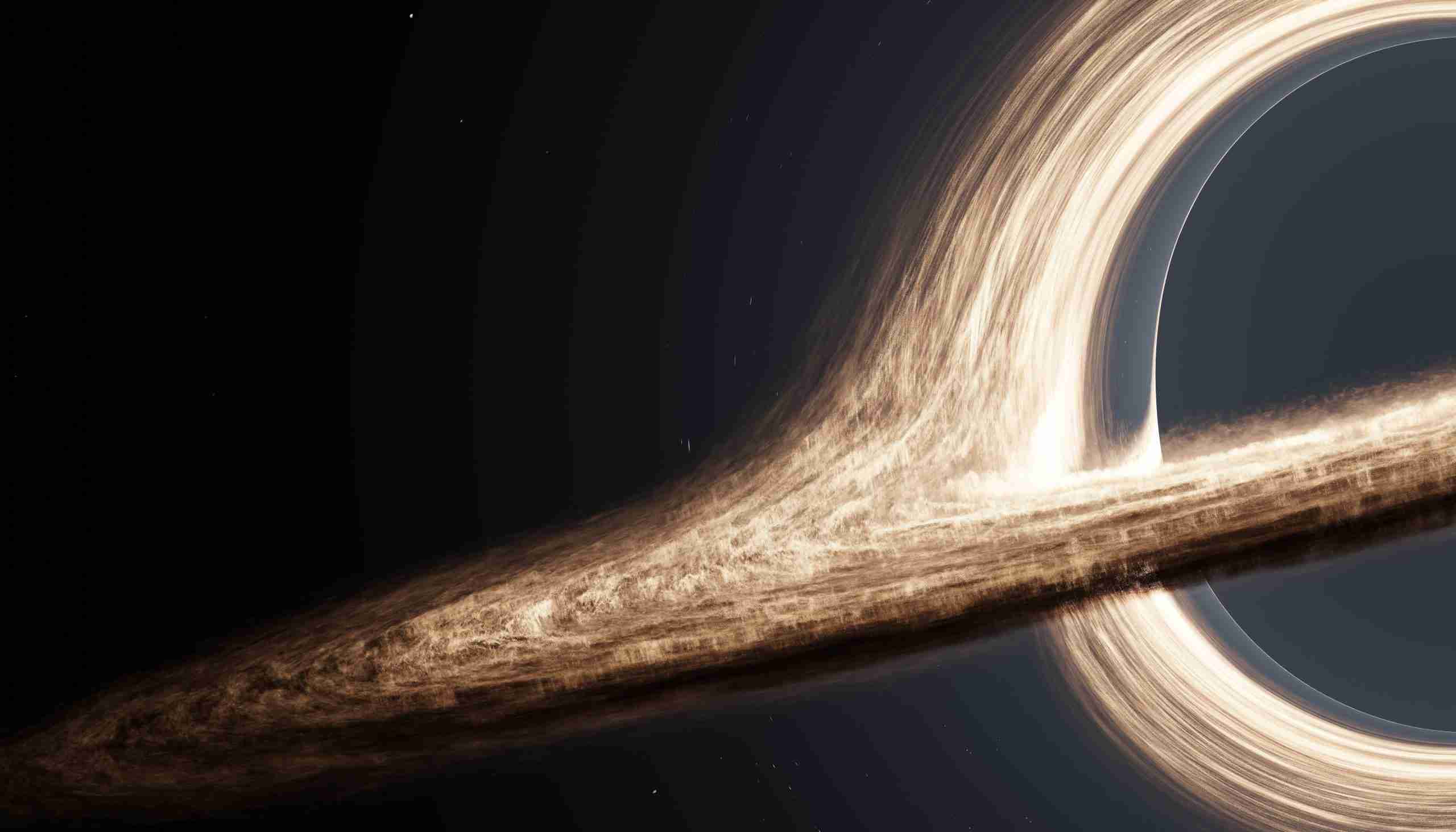
Few subjects capture the imagination like physics, which is part of why it draws so many applicants, and part of why the personal statement is easy to get subtly wrong. Many write to prove they are good at physics, listing top grades, the topics they enjoy, and a long-standing fascination with the universe. Admissions tutors at strong physics departments take ability as a given among their applicants and read instead for something harder to fake: evidence that you think like a physicist. That means curiosity about why the physical world behaves as it does, comfort with using mathematics as the language of that explanation, and the persistence to sit with a problem or an idea you cannot immediately resolve.
This article accompanies our complete guide to writing a UCAS personal statement, which explains the three-question format in full. Here we focus specifically on physics, with worked before-and-after passages for each of the three questions, commentary on why the improved versions succeed, and answers to the questions physics applicants ask us most often.
If you would like one-to-one help from a tutor who studied physics at a leading UK university, our UK university admissions and Oxford and Cambridge admissions services are built around exactly this kind of work.
What physics admissions tutors are actually looking for
The defining feature of university physics, and the thing that surprises many new undergraduates, is how mathematical it is. School physics often rewards recalling the right equation; university physics asks you to derive it, to understand the assumptions behind it, and to reason about what happens when those assumptions break. The strongest applicants already show signs of this shift. Tutors are reading for:
- Physical curiosity. A genuine drive to understand why things happen, not just to describe them or to name the relevant law.
- Mathematical fluency. Comfort using mathematics as the natural language of physics, and evidence you enjoy the derivations rather than tolerating them.
- Problem-solving. A taste for unfamiliar problems, including ones without an obvious method, rather than only exercises with known routes to the answer.
- Independent engagement. Reading, problems, projects or small investigations you pursued on your own, and what you actually took from them.
- Precision of thought. Physicists value clear reasoning and honest treatment of assumptions and limits; a statement that reasons cleanly is itself a small piece of evidence.
For 2027 entry the admissions-test landscape for physics has changed significantly, and which test you sit depends on where you apply. The ESAT (Engineering and Science Admissions Test) is now the central pre-interview test for physics across the most selective universities. Oxford has retired its long-standing PAT (Physics Aptitude Test) and moved Physics and Physics and Philosophy to the ESAT for 2027 entry, joining Cambridge and Imperial, which already use it for the sciences, with UCL requiring it for some courses too. The ESAT is sat before interview and is made up of short, timed modules, with Mathematics 1 compulsory and further papers, including Physics, chosen according to your course. It is assessed separately from your statement, so you should never mention a test, or a score, in your writing. You can read more in our ESAT resources and ESAT preparation guide, or sit a timed ESAT practice test to work on pacing.
The three-question UCAS format
For 2026 entry onwards, the single 4,000-character essay has been replaced by three structured questions, with a 4,000-character total across all three and a minimum of 350 characters each:
- Why do you want to study this course or subject?
- How have your qualifications and studies helped you to prepare for this course or subject?
- What else have you done to prepare outside of education, and why are these experiences useful?
Our main personal statement guide breaks down how to approach each question, and you can check your length against the limit with our UCAS personal statement character counter. Below, we apply that framework specifically to physics, with a weak and an improved version of each.
Physics Personal Statement Examples: Before & After
The following passages are illustrative. They are not templates to copy, doing so would defeat the purpose of a statement designed to reveal your own scientific thinking, but they show the difference between writing that describes and writing that reflects.
Question 1: Why do you want to study physics?
“I have always been fascinated by the universe and how everything works. Ever since I watched documentaries about black holes and space as a child, I have wanted to understand the mysteries of the cosmos. Physics is the most fundamental science, underpinning everything from chemistry to engineering, and I love how it explains the world around us. I find the subject endlessly fascinating and I am excited to study it at a higher level. I am predicted A in Physics and Maths.”*
- “Fascinated by the universe” and childhood documentaries are among the most common openings and say nothing specific
- “How everything works” and “most fundamental science” are slogans, not physics
- Frames the subject through wonder alone, with no reasoning or mechanism
- Mentions predicted grades, which appear elsewhere on the application
- Contains no actual physics for a tutor to engage with
“What changed how I saw physics was realising that a single idea, conservation of energy, let me predict the speed of a falling object without knowing anything about the messy details of its fall. I had been solving such problems with equations of motion, step by step, when it struck me that equating potential and kinetic energy gave the same answer in one line, because the path taken simply did not matter. That a quantity could stay fixed while everything else changed seemed almost like a trick, until I understood it as a deep constraint the universe imposes. I began looking for the same move elsewhere, in momentum, in charge, and what draws me to studying physics is precisely this: the search for the conserved quantities and symmetries that make an unpredictable world calculable.”
- Opens with a specific physical idea rather than a statement of wonder
- Shows understanding of why conservation laws are powerful, not just that they exist
- Demonstrates the shift from plugging in equations to reasoning about principles
- Reveals genuine, self-directed curiosity that generalises
- Contains real physics a tutor could discuss at interview
Question 2: How have your qualifications and studies prepared you?
“I study Physics, Maths and Chemistry at A Level. Maths has given me the tools I need for physics, such as calculus and mechanics. Physics has taught me about mechanics, electricity and quantum theory, and Chemistry has developed my understanding of atomic structure. These subjects have improved my problem-solving and analytical skills and given me a strong foundation for a physics degree. I am confident they have prepared me well.”
- Lists subjects and topics the tutor already knows are on the syllabus
- “Given me the tools” and “strong foundation” assert preparation without evidence
- Generic “problem-solving and analytical skills” claim
- Treats each subject as a list of topics rather than a way of thinking
- Shows no independent thought beyond the curriculum
“Simple harmonic motion was the first topic where the maths and the physics felt like the same thing rather than two subjects meeting. I was surprised that the defining feature, acceleration proportional to displacement and directed back towards the centre, was really just a differential equation in disguise, and that its solution had to be a sine wave because nothing else reproduces itself after two derivatives. What made it click was seeing why a pendulum only behaves this way for small angles: the approximation that sine of theta is roughly theta is doing quiet but essential work, and the model fails once that breaks. Chemistry sharpened the same instinct from another direction, since understanding bonding meant taking energy minima seriously. I have come to see that understanding a piece of physics means knowing the assumptions it rests on, not just the formula it produces.”
- Takes one specific topic and reflects on what made it conceptually revealing
- Shows real understanding, including why the small-angle approximation matters
- Demonstrates the unity of mathematics and physics that defines the degree
- Connects a second subject through a genuine idea rather than a topic list
- Reflects rather than lists, and includes no grades
Recognising a strong passage is easier than writing one. We work one to one with a small number of applicants each cycle — drafting, redrafting and honest feedback until it holds up.
Book a free consultationQuestion 3: What else have you done to prepare, and why is it useful?
“Outside of school I have done a lot to develop my interest in physics. I attended a physics summer school and took part in the British Physics Olympiad, earning a certificate. I read books such as A Brief History of Time, which I found very interesting, and I watch physics videos online. I am also part of my school’s science club. These activities show my passion for physics and my commitment to studying it at university.”
- “Done a lot” followed by a list with no reflection, the classic describe-don’t-reflect error
- Names an olympiad and a certificate rather than a problem or an idea
- Names a famous book but engages with nothing in it
- “Physics videos” and “science club” are vague and unreflective
- Ends on “passion” and “commitment” instead of physical substance
“A British Physics Olympiad question has stayed with me longer than any I answered correctly: it asked me to estimate a quantity I had no formula for, and I spent an evening building an argument from rough numbers rather than looking anything up. I got an answer within an order of magnitude of the accepted value, and what struck me was that physics let me be usefully approximate, that a good estimate could be a real result rather than a failure to be exact. Reading Feynman afterwards, I recognised the same habit in how he reasoned physically before reaching for algebra. Attempting a small write-up of why the sky is blue taught me the limits of my understanding from the other side: I could state that shorter wavelengths scatter more, but explaining why took me into territory I had to read my way through, which is exactly the kind of not-quite-knowing I want more of.”
- Reflects on estimation and approximation, a genuinely physical way of thinking
- Shows persistence and comfort working without a ready-made method
- Engages with a book through a habit of mind rather than naming it
- Describes a self-directed investigation and an honest account of its limits
- Stays specific and reflective throughout
Common mistakes specific to physics applicants
Beyond the general weaknesses covered in our main guide, physics applicants tend to fall into a few recognisable traps.
Leading with wonder alone. Fascination with black holes, the Big Bang or the mysteries of the universe is an extremely common opening and demonstrates nothing on its own. Show reasoning about a mechanism, not just awe at a phenomenon.
Underplaying the mathematics. Some applicants write about physics as though it were a descriptive science and avoid the maths entirely. University physics is deeply mathematical; show that you are comfortable with, and interested in, that side of it.
Listing competitions and certificates. Olympiad participation can be valuable, but only if you reflect on a problem or an idea. One question you thought about deeply, including one you could not finish, demonstrates far more than a list of awards.
Name-dropping popular science. A Brief History of Time, popular books on cosmology and similar titles appear constantly. Mentioning them is fine; mentioning them without engaging with a single idea is not.
Confusing physics with engineering or pure maths. Enthusiasm for building things points towards engineering; enjoyment of abstraction for its own sake points towards mathematics. Show interest in understanding the physical world through mathematics, which is what physics actually is.
Imprecise reasoning. Physicists notice vague claims and ignored assumptions. Say exactly what you mean, and be honest about the conditions under which a model holds.
Applying for physics at Oxford or Cambridge
Everything above applies to all physics applicants, but Oxford and Cambridge sit at the most demanding end, particularly in the mathematical intensity of the first year.
Cambridge physicists apply through Natural Sciences, a broad first-year course in which you study physics alongside other sciences and mathematics before specialising. Applicants sit the ESAT before interview, and the course rewards mathematical confidence and breadth across the sciences rather than early specialisation.
Oxford offers a dedicated Physics degree (and Physics and Philosophy), and for 2027 entry uses the ESAT for both, having retired the PAT it used for many years. A strong statement is what earns the interview. When yours does, our Physics Oxbridge interview questions show the kind of problem tutors actually set. The ESAT score feeds shortlisting alongside your application.
At both, the interview is decisive, and you will be asked to reason aloud through unfamiliar problems rather than recite results. Our library of Oxbridge interview questions gives a sense of what that involves, and the Oxford and Cambridge admissions statistics show how selective a place at these two universities is. Beyond Oxbridge, Imperial Physics admits 14.5% of applicants, a reminder that the ESAT bar and the acceptance rate are not the same thing. If you are still deciding where to apply, our overview of the best universities in the world may help.
For students who want structured support across the whole application, the personal statement, the ESAT, and interview preparation, our Oxford and Cambridge admissions service pairs applicants with tutors who studied physics at these universities and have sat these tests themselves.
A note on building genuine material early
The strongest physics statements are written by applicants who have spent a year or more reading a little beyond the syllabus and wrestling with problems for their own sake, and that habit cannot be manufactured in the final summer. The applicants who write convincingly about a principle, an estimate or a particular idea are usually the ones who started early, which is why we encourage able students to begin developing genuine scientific engagement well before Year 13 through our early academic development programme. Securing top grades in Physics and Maths matters too, and our A Level and IB tutoring supports the results that sit alongside the statement. You can also browse our wider admissions guides and resources.
Conclusion
A strong physics personal statement does not require olympiad medals or a shelf of popular science. It requires you to show that you think like a physicist: that you care why the physical world behaves as it does, that you are comfortable using mathematics to explain it, and that you can sit with a hard problem or an unfamiliar idea without giving up. The applicants who do this best are rarely the ones with the longest list of achievements. They are the ones who took a single principle, problem or idea and reasoned about it carefully, and who write about physics with the precision and curiosity the subject rewards.
Start early, reflect rather than describe, and let real physics do the work. If you would like personalised support with your physics application from a tutor who studied the subject at a leading UK university, contact one of our team at Clavis Education.
Find this article useful? Check out our other resources for students applying for Physics.
ESAT Practice Tests
Practise the ESAT under timed conditions with original questions.
ESAT Guide
Learn about the ESAT including format, scoring, timing, and tips for success.
ESAT Past Papers and Resources
Practise the ESAT with official past papers and other resources.
Frequently asked questions
For the most selective universities, Further Maths is strongly preferred and sometimes required, because university physics is highly mathematical. Always check each course page, as requirements vary. In the statement, what matters is not simply that you take it but that you show genuine mathematical and physical thinking, as in the improved passages above.
For 2027 entry, the ESAT is the main pre-interview test for physics. Oxford now uses it for Physics and Physics and Philosophy, having retired the PAT, and it is used by Cambridge (for Natural Sciences), Imperial and, for some courses, UCL. Check the requirement for every course you apply to, and never mention the test in your statement. We have an ESAT preparation guide and ESAT past papers on our website.
No. Oxford has retired the PAT and moved Physics and Physics and Philosophy to the ESAT for 2027 entry, as part of joining the shared UAT-UK testing framework used by Cambridge and Imperial. Older guidance still referring to the PAT is out of date, though past PAT papers can still be useful general preparation.
No. The ESAT is assessed separately, and mentioning it wastes characters that should demonstrate your engagement with physics. Let the test do its own work.
There is no required reading list, and what you read matters far less than what you take from it. The mistake to avoid is listing popular titles to look well read. One principle, problem or idea you have genuinely thought about is worth more than a shelf you have skimmed.
Not directly. Cambridge physicists apply through Natural Sciences, a broad first-year course covering several sciences and mathematics before you specialise towards physics. Oxford, by contrast, offers a dedicated Physics degree. This is worth understanding, because the same personal statement goes to all five of your choices and should read well for both a specialised and a broader science course.
Yes, ideally by someone who studied physics at a selective university, not only someone who can correct grammar. A specialist will catch where you are describing rather than reasoning, where your physics is imprecise, or where you have leaned on wonder instead of genuine understanding. You can read about the backgrounds of our team or get in touch.