Natural Sciences Personal Statement Examples (2026): Before & After Passages, with Analysis
- Published:
- Updated: September 1, 2026
- By Miguel
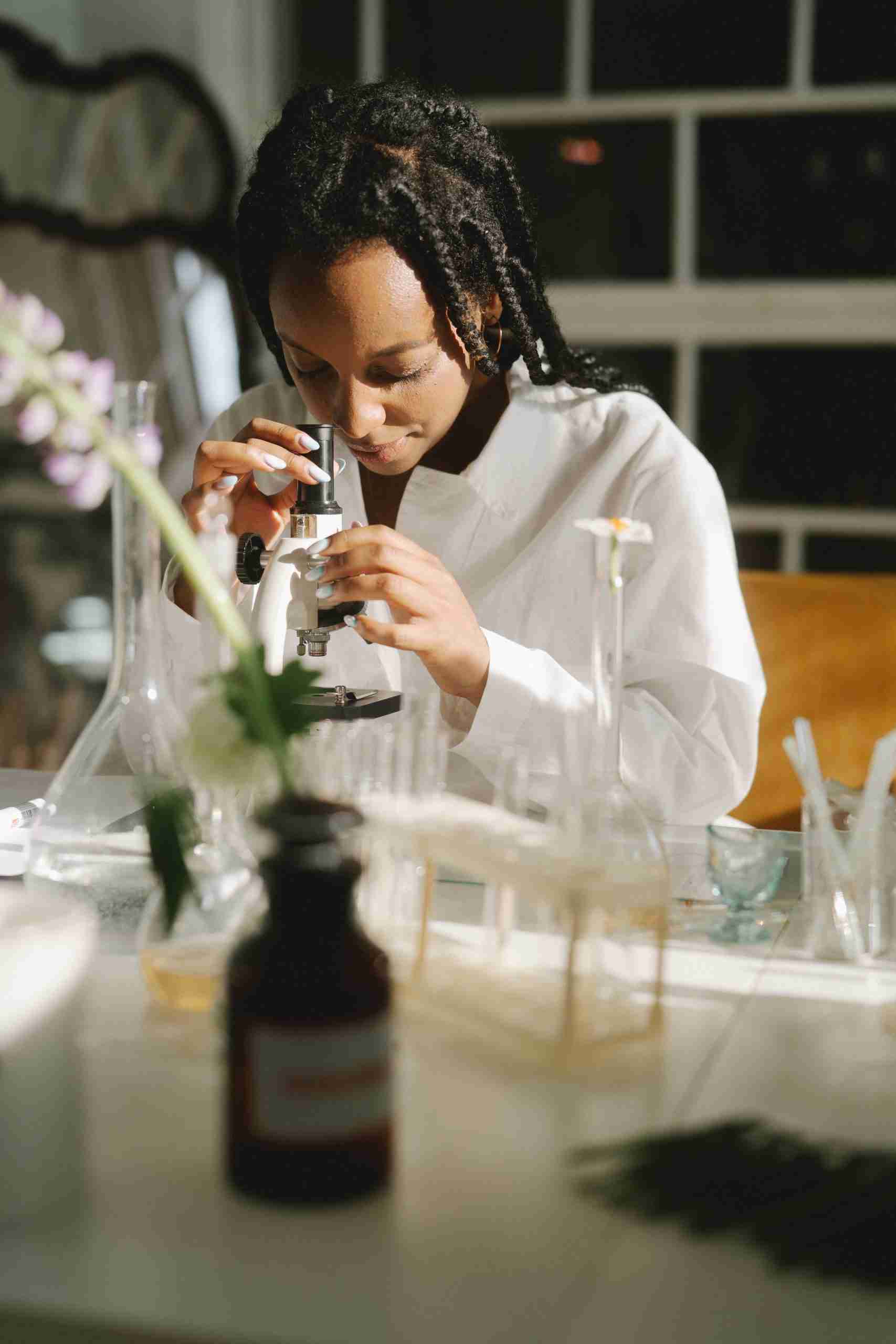
The personal statement poses a particular challenge for Natural Sciences applicants that it does not for most others, and this article addresses it directly. Because the same statement goes to all five of your UCAS choices, and most applicants pair Natural Sciences with single-subject science courses elsewhere, your statement has to show genuine scientific breadth for Natural Sciences and real depth for the single-subject courses, at the same time.
This article accompanies our complete guide to writing a UCAS personal statement, which explains the three-question format in full. Here we focus specifically on Natural Sciences, with worked before-and-after passages for each of the three questions, commentary on why the improved versions succeed, and answers to the questions applicants ask us most often. Since your other choices are likely to be single sciences, it is worth reading alongside our biology, chemistry, and physics personal statement examples too.
If you would like one-to-one help from a tutor who studied the sciences at Cambridge, our Oxford and Cambridge admissions and UK university admissions services are built around exactly this kind of work.
What Natural Sciences admissions tutors are actually looking for
The single most important thing to understand about Natural Sciences is that it is not for students who cannot decide. It is for students who are genuinely excited by more than one science and by the connections between them, and who have the mathematical ability to cope with a demanding, quantitative first year. The distinction matters, because a statement that reads as indecision, “I can’t choose, so I want to keep my options open”, is far weaker than one that shows real, active curiosity across the sciences. Tutors are reading for:
- Genuine breadth with genuine depth. Real interest in more than one science, evidenced by specific ideas, not a general love of “all of them.”
- A feel for the connections. The strongest applicants see the boundaries between the sciences as conveniences rather than facts, and are drawn to questions that cross them.
- Mathematical ability. Maths underpins the whole course, including much of the biology, which is why it is now a required subject; comfort with the quantitative side is essential.
- Scientific reasoning. Curiosity about mechanism and cause, and a habit of asking why, not just what.
- Independent engagement. Reading, problems or investigations you pursued yourself, and what you took from them.
On the practicalities: for 2027 entry, all Cambridge Natural Sciences applicants sit the ESAT (Engineering and Science Admissions Test), taking Mathematics 1 plus two further modules chosen from Biology, Chemistry, Physics and Mathematics 2. When you apply you also specify whether you are applying for Biological or Physical Natural Sciences; this does not restrict your choices once you arrive, but it shapes your interview and helps colleges assign interviewers. Mathematics and two sciences are now required subjects, and the typical offer is A*A*A. The ESAT is assessed separately from your statement, so you should never mention a test, or a score, in your writing. You can read more in our ESAT resources or practise original questions under timed conditions using our ESAT practice tests.
The three-question UCAS format
For 2026 entry onwards, the single 4,000-character essay has been replaced by three structured questions, with a 4,000-character total across all three and a minimum of 350 characters each:
- Why do you want to study this course or subject?
- How have your qualifications and studies helped you to prepare for this course or subject?
- What else have you done to prepare outside of education, and why are these experiences useful?
Our main personal statement guide breaks down how to approach each question, and you can check your length against the limit with our UCAS personal statement character counter. Below, we apply that framework specifically to Natural Sciences, with a weak and an improved version of each.
Natural Sciences Personal Statement Examples: Before & After
The following passages are illustrative. They are not templates to copy, doing so would defeat the purpose of a statement designed to reveal how you think, but they show the difference between writing that describes and writing that reflects.
Question 1: Why do you want to study Natural Sciences?
“I have always loved science and cannot choose between my favourite subjects. Biology, Chemistry and Physics all fascinate me, and Natural Sciences at Cambridge is the perfect course because it lets me study all of them and keep my options open. I don’t want to specialise too early, and I am excited to explore different sciences before deciding. I am passionate about understanding the world around me and believe Natural Sciences would suit me perfectly. I am predicted A*A*A.”
- “Cannot choose” and “keep my options open” read as indecision, not curiosity
- “All fascinate me” claims breadth without demonstrating any of it
- “Explore before deciding” suggests a lack of direction rather than genuine interest
- “Passionate about understanding the world” is a slogan, not science
- Mentions predicted grades, and contains no actual scientific idea
“What made me want to study the sciences together rather than apart was realising that a question I had filed under ‘biology’, why cells are so small, is really answered by physics. A cell depends on diffusion to move materials across its membrane, and because volume grows faster than surface area, a cell that gets too large simply cannot supply its interior fast enough: a limit on life set by geometry. I began seeing this everywhere, that the chemistry of a reaction is the physics of electrons, that the growth of a population obeys mathematics, until the boundaries between the sciences started to look like features of the timetable rather than of the world. What draws me to Natural Sciences is the chance to study the questions where those boundaries dissolve, with the mathematics that underlies all of them kept close at hand.”
- Opens with a specific idea that crosses two sciences, showing breadth and depth at once
- Demonstrates genuine understanding (surface-area-to-volume and diffusion), not a general love of science
- Articulates the Natural Sciences ethos, that the divisions between subjects are conveniences
- Foregrounds mathematics as the shared foundation
- Reads as active curiosity, not indecision, and works for a single-science application too
Question 2: How have your qualifications and studies prepared you?
“I study Biology, Chemistry, Physics and Maths at A Level, which are ideal for Natural Sciences. Biology has taught me about living systems, Chemistry about reactions, Physics about the physical world, and Maths has given me analytical skills. These subjects cover all the sciences in Natural Sciences and have prepared me well for the breadth of the course. I am confident I can handle studying several sciences at university.”
- “Ideal for Natural Sciences” and “cover all the sciences” treat preparation as box-ticking
- Lists what each subject teaches without demonstrating any thought
- Generic “analytical skills” claim
- Nothing connects the subjects, which is the whole point of the course
- Asserts readiness for breadth without showing genuine engagement
“Studying rates of reaction in Chemistry and then enzyme kinetics in Biology, only weeks apart, I was struck that they were the same mathematics wearing different coats: the same curves, the same idea of a step that limits the whole. It was the first time a topic in one subject made me understand another more deeply, and it changed how I study, I began looking for the shared structure beneath apparently separate phenomena. Physics gave me the habit of asking what a model deliberately leaves out, and Maths, especially calculus, turned out to be the language all three kept reaching for: radioactive decay, reaction rates and population growth are, underneath, the same exponential idea. I have come to think that studying one science in isolation means missing half of what it is telling you, which is exactly why I want to study them together.”
- Takes specific topics (reaction rates, enzyme kinetics) and reveals the connection between them
- Shows the connective insight developing into a way of studying
- Foregrounds mathematics as the shared language of the sciences
- Demonstrates depth in real material while showing breadth of thought
- Reflects rather than lists, and includes no grades
Recognising a strong passage is easier than writing one. We work one to one with a small number of applicants each cycle — drafting, redrafting and honest feedback until it holds up.
Book a free consultationQuestion 3: What else have you done to prepare, and why is it useful?
“Outside of school I have done a lot to prepare for Natural Sciences. I attended science summer schools and took part in the Biology and Chemistry Olympiads. I read popular science books such as A Short History of Nearly Everything, which I found fascinating. I watch science documentaries and follow science news. I am part of my school’s science society. These activities show my passion for science and my suitability for Natural Sciences.”
- “Done a lot” followed by a list with no reflection, the classic describe-don’t-reflect error
- Olympiad participation is named rather than reflected on
- A popular book is named but no idea from it is engaged with
- Documentaries and news are vague and passive
- Ends on “passion” rather than genuine insight
“Researching antibiotic resistance for an EPQ began as a biology project and refused to stay one. To understand why resistance spreads, I needed the mathematics of exponential growth and selection; to understand how the drugs work, the chemistry of how a molecule binds to a bacterial enzyme; and to understand why resistance is so hard to design around, a little of the physics of molecular shape. I had set out to answer one question and found it opening onto three subjects at once. My essay was more confident in the biology than in the chemistry I was still learning, but the gaps were the point: they showed me exactly what I did not yet understand and wanted to. Holding a real problem together across the sciences, rather than in the separate boxes my timetable puts them in, is the experience I most want to repeat at university.”
- Describes a specific, self-directed project that genuinely crosses the sciences
- Shows depth in one science and honest, curious awareness of the limits of the others
- Embodies the Natural Sciences ethos rather than asserting a love of “all science”
- Reflects on what the work revealed, including what it exposed as not yet understood
- Stays specific and reflective throughout
Common mistakes specific to Natural Sciences applicants
Beyond the general weaknesses covered in our main guide, Natural Sciences applicants tend to fall into a few recognisable traps.
Framing the course as indecision. Writing that you want Natural Sciences because you cannot choose, or to keep your options open, is the commonest mistake. Tutors want active curiosity across the sciences, not a delayed decision.
Breadth without depth. Claiming to love biology, chemistry and physics equally, with nothing specific about any of them, is weaker than showing real engagement with one or two and genuine curiosity about their connections.
Neglecting the mathematics. Maths underpins the whole course and is now a required subject. A statement that avoids or downplays the quantitative side raises real doubts about fit.
Listing sciences instead of connecting them. Natural Sciences is defined by the links between subjects. A statement that treats them as three separate interests misses what makes the course distinctive.
Failing the breadth-and-depth balance. Because your statement also goes to single-subject courses, one that is purely broad can read as thin to a chemistry or physics tutor, while one that is narrowly specialised can look ill-suited to Natural Sciences. The strongest statements do both, deep engagement plus connective curiosity.
Name-dropping popular science. A Short History of Nearly Everything and similar titles appear constantly. Mentioning them is fine; mentioning them without engaging with an idea is not.
Applying for Natural Sciences at Cambridge
An important point first: Oxford does not offer a Natural Sciences degree; it teaches the sciences as separate subjects. Among Oxford and Cambridge, Natural Sciences is a Cambridge course only, and elsewhere it is offered by universities such as Durham, UCL, Bath, Exeter and Lancaster, though these do not use the ESAT. The competition is a different order outside Cambridge: UCL Natural Sciences took 1,002 applications for 135 places, a 13.5% acceptance rate.
At Cambridge, Natural Sciences begins broadly: in the first year you take three experimental sciences and one mathematics option, then specialise progressively, until by the third year you might be studying a single subject such as genetics or astrophysics. You apply to either the Biological or Physical stream, sit the ESAT, and, if shortlisted, are interviewed on the sciences you have studied, so it is generally best to apply for the stream that matches your A Levels. To learn more about the ESAT, we have a complete ESAT guide as well as past paper resources. For students who want to practise realistically difficult questions under timed conditions in the same format as the ESAT, try out our free ESAT practice tests.
The typical offer is A*A*A, with Mathematics and two sciences required. Because the same personal statement goes to all five of your UCAS choices, and those choices are likely to mix Natural Sciences with single-subject sciences elsewhere, the strongest statements show genuine depth and the curiosity that connects the sciences, so they read well for both.
Our library of Oxbridge interview questions gives a sense of what the interview involves, and the Oxford and Cambridge admissions statistics show how competitive a place is. If you are still deciding where to apply, our overview of the best universities in the world may help.
For students who want structured support across the whole application, the personal statement, the ESAT, and interview preparation, our Oxford and Cambridge admissions service pairs applicants with tutors who studied the sciences at Cambridge and have sat these tests themselves.
A note on building genuine material early
The strongest Natural Sciences statements rest on genuine, sustained curiosity across the sciences, and that cannot be manufactured in the final summer. The applicants who write convincingly about the connections between subjects are usually the ones who have spent a year or more reading and thinking beyond the syllabus, following a question wherever it leads rather than where the timetable sends it. This is why we encourage able students to begin developing genuine scientific engagement well before Year 13 through our early academic development programme. Securing top grades across your sciences and Maths matters too, and our A Level and IB tutoring supports the results that sit alongside the statement. You can also browse our wider admissions guides and resources.
Conclusion
A strong Natural Sciences personal statement does not require you to master three sciences before you arrive, or to have chosen your specialism. It requires you to show that you are genuinely excited by more than one science, that you see the connections between them, and that you have the mathematical confidence the course demands, all while showing enough depth to convince a single-subject tutor too. The applicants who do this best are rarely the ones who claim to love everything. They are the ones who followed one real question across the boundaries between subjects and found it more interesting for refusing to stay in a single box.
Start early, reflect rather than describe, and let genuine curiosity do the work. If you would like personalised support with your Natural Sciences application from a tutor who studied the sciences at Cambridge, contact one of our team at Clavis Education.
Find this article useful? Check out our other resources for students applying for Natural Sciences
ESAT Practice Tests
Practise the ESAT under timed conditions with original questions.
ESAT Guide
Learn about the ESAT including format, scoring, timing, and tips for success.
ESAT Past Papers and Resources
Practise the ESAT with official past papers and other resources.
Frequently asked questions
Natural Sciences is Cambridge’s broad science degree. Instead of admitting you to a single subject, it lets you study several sciences and mathematics in the first year and specialise progressively, until you may study a single subject by your third year. There are no standalone Physics, Chemistry or Biology degrees at Cambridge; all are studied through Natural Sciences. Several other universities, including Durham and UCL, offer their own Natural Sciences programmes.
You specify one of the two streams when you apply. The choice does not restrict which subjects you can study once you arrive, but it shapes your interview and helps colleges assign interviewers, so it is generally best to apply for the stream that matches your A Levels, Physical if you take Physics and Maths, for example. You can still study across both areas during the course.
For Cambridge, Mathematics and two sciences (from Biology, Chemistry, Physics and Further Maths) are now required, and the typical offer is A*A*A. All applicants sit the ESAT, taking Mathematics 1 plus two further modules. Requirements vary at other universities, so check each course, and never mention the test in your statement.
No. Oxford teaches the sciences as separate degrees, such as Chemistry, Physics and Biology, and does not offer a combined Natural Sciences course. Among Oxford and Cambridge, Natural Sciences is available only at Cambridge; Durham, UCL and others offer their own versions.
This is the central challenge, because the same statement goes to all five choices. The solution is not to write “I can’t choose,” but to show genuine depth in the science or sciences you engage with most, together with the curiosity that connects them. A statement that demonstrates real understanding and a feel for how the sciences link reads convincingly to both a Natural Sciences tutor and a single-subject one.
It keeps your options open in practice, but writing about it that way is a mistake. The course is for students genuinely excited by multiple sciences and their connections, not for those who simply cannot decide, and tutors can tell the difference. Frame your breadth as active curiosity, not postponed commitment.
Yes, ideally by someone who understands the course and Cambridge’s admissions, not only someone who can correct grammar. A specialist will catch where your statement reads as indecision, where it claims breadth without depth, or where it fails to balance the demands of Natural Sciences and your single-subject choices. You can get in touch with our team.